Oil Cleanser or Micellar Water: Two Different Starting Points
Oil cleanser or micellar water? Compare texture, removal habits and rinse preferences to choose a first cleanse that fits your makeup and routine.
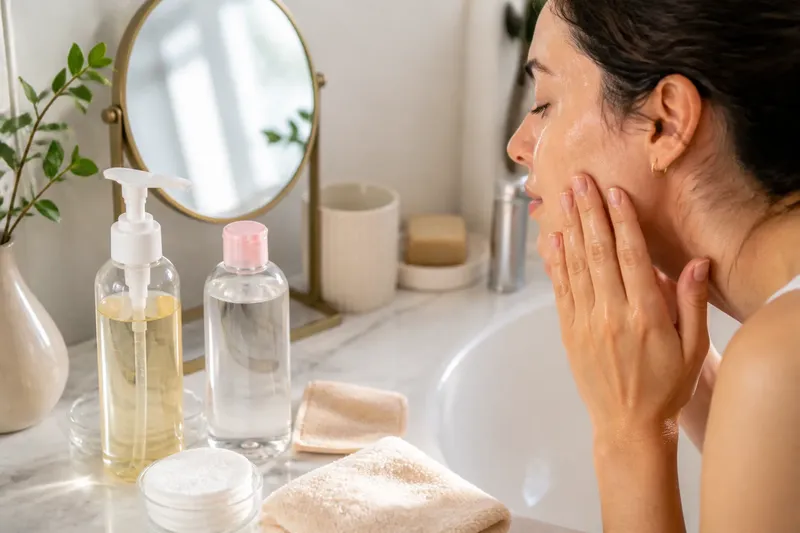
You come home with mascara at the lash line, sunscreen on your cheeks and a cotton pad waiting beside the basin. Choosing an oil cleanser or micellar water is less about picking a champion than deciding how you want the first part of cleansing to feel and fit into your evening.
Both formats can loosen makeup and daily residue, but they invite different habits. An oil cleanser asks you to use your hands and usually rinse; micellar water is commonly swept over the skin with a pad. Start with what you need to remove, then consider texture, water access and the sensation you prefer.
Begin with what is on your face
Think about the products you have worn, rather than treating every evening as the same job. A light layer of complexion makeup presents a different removal task from several coats of long-wear mascara or a tenacious lipstick.
Sunscreen also belongs in the decision. Its feel and removal instructions vary by product, so check the packaging and notice whether your usual wash leaves a residue or requires extra rubbing. If you wear little beyond a light moisturiser, a dedicated first cleanse may not be needed every night.
- For eye makeup, note whether mascara or liner is labelled long-wear or water-resistant, and whether the maker recommends a particular removal method.
- For face makeup, consider how much you apply and whether it tends to cling around the nose, hairline or jaw.
- For sunscreen, look at the label and reflect on how your current cleansing routine feels afterwards.
- For a minimal day, ask whether adding another product would solve a real problem or simply add a step.
These observations narrow the choice without turning cleansing into a contest. If stubborn product is the main issue, begin by looking for a format you can use gently and thoroughly, rather than scrubbing harder with the product already at hand.
Choose the feel you will want to repeat
An oil cleanser usually has a slick, cushiony texture. It is spread across dry hands and dry skin in many common routines, then worked over the face; water may turn it milky before it is rinsed away. Some formulas feel rich, while others rinse with a lighter finish.
Micellar water is a liquid used with a cotton pad or reusable cloth. It can feel quick and familiar, especially if you like seeing residue transfer onto the pad. The trade-off is the physical contact: repeated passes may feel unpleasant on skin or around delicate eye areas, particularly if you press or drag.
Texture preferences are not trivial. A product that feels agreeable is easier to use patiently, while a finish you dislike can encourage a rushed rinse or unnecessary rubbing. Consider whether you want a hands-on massage, a wipe-and-go motion, or an option that can work in different ways depending on the evening.
Imagine you wear a sheer base and dislike the sensation of cotton pads. You could try a small amount of oil cleanser on dry hands, spread it over the face, then rinse as directed; the observable aim is that makeup loosens without repeated wiping, and that the rinse feels acceptable to you.
Set up the routine each format invites
For an oil cleanser, clear the area around the basin and begin with dry hands if the product directions call for it. Distribute the cleanser over the face with light movements, giving makeup time to loosen rather than pressing at it. If the formula is designed to emulsify, wet your hands to turn it milky, then rinse.
Some oil cleansers are followed by a water-based cleanser; others may leave a finish that does not call for another wash in your routine. The product’s directions and how your skin feels afterwards help you decide. A second cleanse is not automatically necessary just because the first product is oil-based.
With micellar water, wet a pad rather than using it nearly dry, then hold it gently over an area with makeup before moving it across the skin. Use a fresh section of the pad when it becomes coated, instead of repeatedly spreading residue around. Around the eyes, avoid tugging at lashes or rubbing back and forth.
Some micellar waters are intended to be rinsed off; others are marketed for leave-on use. Read the label rather than assuming the name tells you what to do. If the product leaves a sensation you dislike, rinsing may be an option when its directions allow it.
Think of the choice like a damp cloth and a soft brush: each can lift dust, but their contact with a surface differs. Here, the important distinction is not that one is inherently gentler; it is how much wiping, massage and rinsing your chosen routine involves.
Match the format to the setting
At a basin, an oil cleanser may suit someone who prefers using fingertips and rinsing in one continuous motion. It can be less convenient when water is scarce, when you are travelling without easy access to a sink, or when you dislike a slippery feel on your hands.
Micellar water can suit a dressing table or a travel kit when a wipe-based routine is convenient. It still needs enough product on the pad to move comfortably, and disposal or washing of pads is part of the routine. Reusable cloths reduce reliance on disposable pads, but they need regular laundering and a place to dry.
Consider storage as well. A pump bottle may be easy to use beside a basin; a cap that can leak may be awkward in a wash bag. A micellar bottle can be straightforward to pour, but a loose cap or a soaked pad can make travel messy. Packaging is part of the daily experience, not a small detail separate from the formula.
Oil cleanser or micellar water: what should you ask?
Can micellar water remove waterproof mascara?
Some formulas are intended to remove long-wear or water-resistant makeup, while others may be better suited to lighter products. Check the label and use a gentle hold rather than scrubbing if you try it near the eyes.
Does an oil cleanser always need a second cleanser?
No. Some routines use an oil cleanser alone, while others follow with a water-based cleanser to remove remaining residue or suit a particular skin preference. Let the product directions and your skin’s response inform that choice.
Which format is better for sensitive-feeling skin?
There is no universal answer: a formula’s ingredients and the amount of friction both matter. A patch of discomfort, stinging or persistent irritation is a reason to stop using the product and seek advice from a qualified clinician if symptoms continue.
Can I use either one every evening?
Use a first cleanser when it serves your routine, rather than treating it as compulsory after every day. The amount and type of makeup, sunscreen and other products you have worn can change what feels appropriate.
Make a small trial and decide from the result
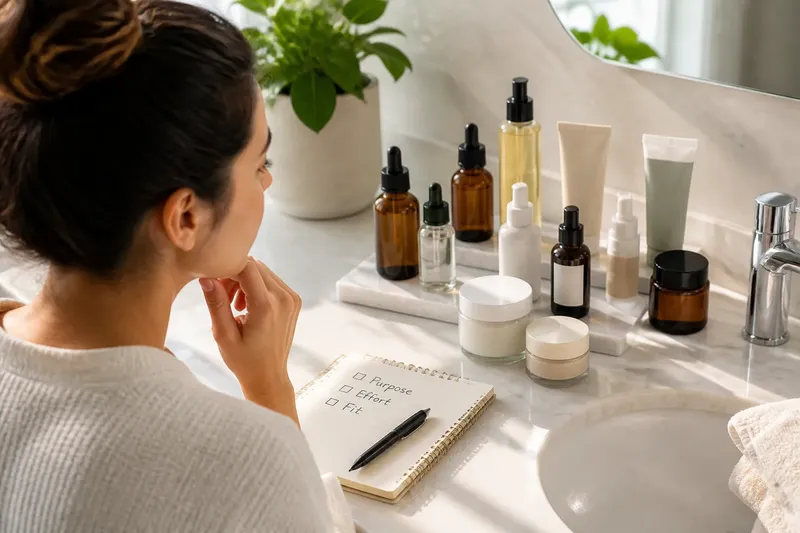
Choose one format for a few ordinary evenings, without changing several other products at once. Notice whether it removes the products you wear, how much effort it takes, whether you feel a need to rub, and how your skin feels after the full routine. These are practical observations, not a scorecard.
If you are comparing products, keep the rest of your cleansing routine steady. For instance, imagine you often wear a water-resistant mascara and find yourself wiping until the lashes feel uncomfortable. You might try a remover that explicitly suits that makeup, using it as directed; the useful result to look for is easier loosening with less repeated contact, not a promise that every trace disappears instantly.
Change course if the product stings, leaves a persistent film you dislike, or makes cleansing feel like a chore. If neither format fits, a dedicated eye-makeup remover or another cleanser may be more suitable for the products you use. Labels and manufacturer instructions matter, particularly for use around eyes and for rinse directions; follow them, and ask a qualified professional about ongoing skin concerns.
For a final decision between oil cleanser or micellar water, favour the format that removes your actual makeup with less fuss and a comfortable amount of contact. A useful first cleanse is not the one with the grandest claims; it is the one whose texture, removal method and place in your routine make sense on an ordinary evening.