The More-Steps-Means-More Myth
A longer skincare routine is not automatically more considered. Learn how to judge each step by its purpose, effort and fit with your real habits.
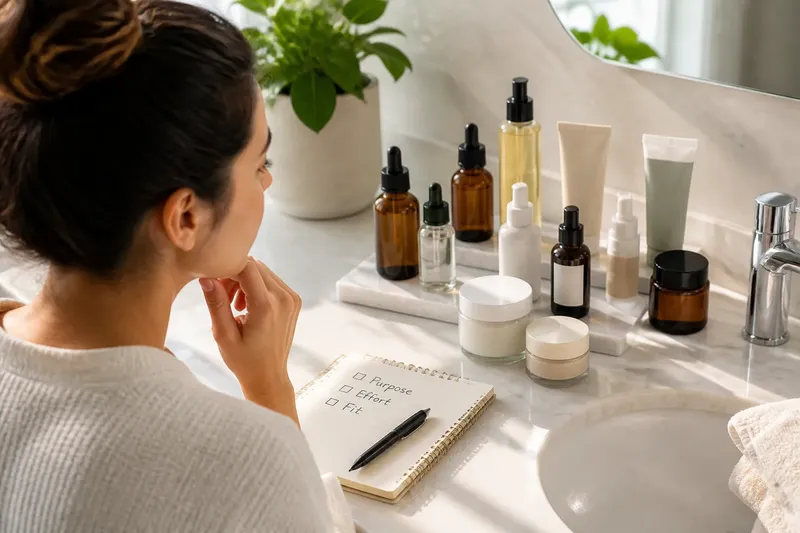
You put your moisturiser on, glance at the row of bottles beside the tap and wonder if your routine is missing a step. A longer skincare routine can look more considered, but the number of products says little about whether each one earns its place.
Does a longer skincare routine work better?
Not by default. A step is useful when it serves a clear purpose for your skin, suits how you use it and does not make the rest of the routine harder to keep up.
More products can mean more opportunities to address different needs, but they also bring extra decisions: what goes first, what can be combined, and whether a new product is causing irritation or simply sitting unused. If you cannot explain why an item is there, its place in the routine deserves a second look.
Think of routine steps like items in a well-used kitchen drawer. A sharp knife and a reliable peeler each have a job; adding tools because a drawer looks sparse does not make cooking more thoughtful.
How can you tell what each step is for?
Give every product a plain-language job. “Cleanse away the day”, “moisturise dry areas” or “apply sun protection before going outside” is more informative than “complete my routine”. If two products seem to do the same thing, ask whether you genuinely use them in different situations.
Separate the product’s intended function from the feeling that it is supposed to be essential. A toner, essence, serum or facial mist may be enjoyable or useful for a particular preference, but its name alone does not establish that it fills a gap.
For each step, consider three questions:
- Purpose: What need or preference does it address?
- Effort: Does applying it, waiting for it to settle or remembering it feel manageable?
- Place: Does it fit naturally into the time and setting where you use it?
A product can have a sound purpose and still be a poor fit if it regularly gets skipped or leaves you with a routine you resent. That is useful information, not a failure of discipline.
Which steps deserve a place in a routine?
Start with what your day actually calls for, rather than copying a fixed sequence from someone else. A routine might centre on cleansing, moisturising and sun protection in the morning, with cleansing and moisturising later; someone else may have a specific product they have chosen for a particular concern.
Keep the distinction between a core need and an optional preference clear. Sun protection, for instance, has a different role from a hydrating serum chosen because its texture feels pleasant. Both can belong, but they do not need the same justification.
Also think about the conditions in which you use a product. A rich cream may suit a dry-feeling evening routine but feel unwelcome before a busy morning. A treatment may make more sense on a night when you have time to apply it thoughtfully than in a rushed sequence at the sink.
For product use, follow the label and manufacturer’s instructions; if a persistent skin concern or reaction needs attention, seek advice from a qualified health professional.
How do you make a routine easier to maintain?
Make the routine fit the moments already in your day. If you tend to wash your face at the bathroom sink before bed, keep the products you use there; if morning is hurried, avoid building the routine around several separate waiting periods.
Notice friction without turning it into a verdict about yourself. A lid that is awkward with wet hands, a pump that dispenses too much or a product that pills under another layer can make a theoretically sensible step inconvenient. Practical design matters because routine is repeated in ordinary conditions, not performed in a product demonstration.
Imagine you have a serum you like, but it often gets left behind because you apply it after a moisturiser that makes your skin feel slippery. You could try using the serum at a different point in the routine, or decide that the extra step is not worth the hassle; either choice gives you an observable outcome to judge, such as whether you reach for it more often or feel less burdened.
What should you ask before adding another step?
Should I add a serum to my routine?
Add one if you can name the purpose it serves and it fits comfortably alongside what you already use. If the reason is only that other routines include one, pause before adding another bottle.
Do I need a separate eye cream?
That depends on your preference and what you want from the product, rather than on the idea that every area needs its own jar. Consider whether a separate formula makes a practical difference for you or simply adds another purchase and application.
How many products should a skincare routine have?
There is no single count that makes a routine complete. The useful measure is whether each product has a clear role and whether the full routine remains comfortable to follow.
Can I remove a step I do not enjoy?
You can reconsider an optional step that feels inconvenient, redundant or unpleasant to use. If it is a treatment you are using for a specific concern, check its directions and ask a qualified professional if you are unsure about changing it.
When is a longer routine genuinely useful?
Extra steps can make sense when they meet distinct needs without creating more work than you want. For example, a person may use a cleanser to remove the day’s residue, a treatment for a chosen concern and a moisturiser for comfort; each item has a different job, rather than appearing simply to fill out a sequence.
There is also room for pleasure. A cooling mist or a balm with a texture you enjoy may not be indispensable, yet it can earn a place if you value using it and the rest of the routine remains manageable. “Optional” does not mean “pointless”.
The more-steps-means-more myth fades when you judge a longer skincare routine by its purpose, effort and fit with your own habits. Keep the steps that make sense to you, question the ones that add only friction, and let the routine be as short or as involved as its real jobs require.